
Aarón Sánchez, the Mexican-American celebrity chef, TV personality, and restaurateur, has an estimated net worth of around $4 million as of 2026. That figure comes primarily from Celebrity Net Worth, the most widely cited aggregator for this kind of estimate, and it reflects a career built across Food Network appearances, restaurant ownership, cookbook deals, endorsements, and branded media projects rather than any single massive payday.
Aarón Sánchez Net Worth Estimate and Income Breakdown

Marcus Keller
27 May 2026
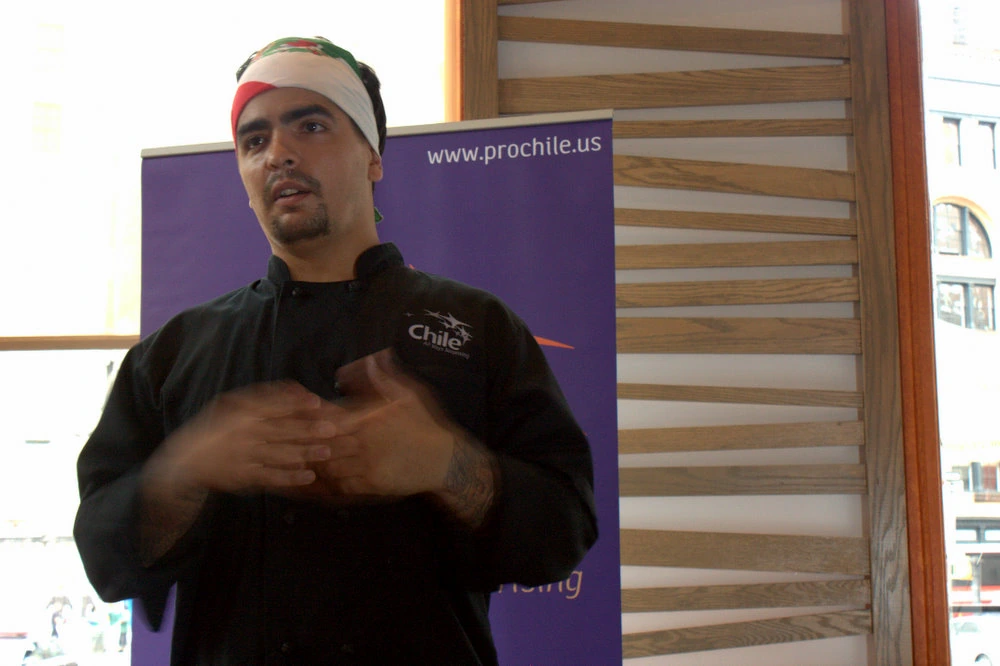
The right Aarón Sánchez: who this estimate covers
This profile is about Aarón Sánchez the chef and television personality, born in 1976 in El Paso, Texas, to restaurateur and cookbook author Zarela Martínez. He has a twin brother named Rodrigo. That background matters for disambiguation because "Aaron Sanchez" (with or without the accent marks) is a common enough name that generic searches can pull up unrelated people, including, for example, a bankruptcy filing from an "Elvis Aaron Sanchez" in California that has nothing to do with the chef. If you are cross-referencing legal or financial records, always confirm the full birth details before drawing any conclusions.
The Aarón Sánchez covered here is the one you have seen on Chopped, Chopped Jr., and MasterChef on Food Network; the host of Spanish-language series "3 Minutos con Aarón" and "Motochefs" on Fox Life; and the co-owner of the New Orleans restaurant Johnny Sánchez. InsideHook reports that Chef Aarón Sánchez is the chef and co-owner of the New Orleans restaurant Johnny Sánchez. He is also a cookbook author and a mentor with Chefs Move!, a diversity-focused culinary scholarship and training program. There are sibling profiles on similarly named public figures, including Aaron Sanchez the baseball pitcher, which is a genuinely separate person and a separate wealth story.
The net worth number and what we know about it
The single most reported estimate is $4 million, as published by Celebrity Net Worth, which categorizes Sánchez under "Richest Celebrity Chefs." No other major financial outlet has published a competing standalone net worth figure for him, so this is effectively the anchor number in the space. That said, Celebrity Net Worth does not publish an itemized breakdown of assets and liabilities for Sánchez, and no verified income figures from tax filings or disclosed contracts are publicly available. The $4 million figure should be understood as a reasonable aggregate estimate, not a certified or audited number.
When you see net worth estimates vary across different websites (and they will), the gap usually comes down to when the estimate was last updated, which income streams the site chose to count, and whether they factored in business closures or financial setbacks. For Sánchez specifically, the $4 million figure has been relatively stable because his income streams, while diverse, are mid-tier by celebrity chef standards rather than in the Gordon Ramsay or Bobby Flay range.
How net worth estimates like this are built
The standard formula is straightforward: total assets minus total liabilities equals net worth. Assets include things like real estate, restaurant equity, investment accounts, vehicles, and any ownership stakes in media or business ventures. Liabilities cover mortgages, business loans, and other debts. The tricky part is that for most celebrities, you only have access to a fraction of that data publicly, so estimators are doing a lot of inference.
For a chef and TV personality like Sánchez, the estimates are typically built by adding up what can be reasonably inferred: Food Network appearance fees (which for established on-air talent can range from the low six figures to several hundred thousand dollars annually), restaurant ownership equity (valued using industry revenue multiples), cookbook advances and royalties, brand endorsement contracts, and any separately disclosed business income. None of those figures are public for Sánchez specifically, so the $4 million estimate is essentially a best-guess aggregate from people who track this category professionally.
Where his money actually comes from
Television and hosting
Television is almost certainly Sánchez's highest-profile income stream. He has been a fixture on Food Network since its early days, starting with appearances on "Melting Pot" and building to regular judge and host roles on Chopped, Chopped Jr., and MasterChef. He also expanded into Spanish-language programming with "3 Minutos con Aarón" and "Motochefs" on Fox Life, which broadens both his audience and his contract opportunities. More recently, Forbes covered his 2024 Hulu series "Talking Sabor with Aarón Sánchez," which signals continued mainstream media relevance and ongoing production income. TV hosting fees for established Food Network talent are rarely disclosed publicly, but repeat appearances over many years accumulate meaningfully.
Restaurants and food business
Sánchez co-founded Johnny Sánchez, a New Orleans taqueria, with chef John Besh, who announced its opening plans in 2014. As of February 2019, Besh exited the partnership and Sánchez, along with partners Miles Landrem and Drew Mire, took full ownership of the restaurant. Johnny Sánchez became his primary restaurant holding, though the business has had a difficult end: reports indicate the restaurant announced it would close after 11 years, with a shutdown around May 2026. A restaurant closure like this removes an ongoing asset from the balance sheet and could modestly reduce net worth depending on outstanding lease obligations or other liabilities tied to the business. Restaurant equity is rarely a clean win for individual chefs unless they own the real estate outright or sell the concept at a premium.
Cookbooks and publishing

Sánchez has published two cookbooks, which generate both upfront advance income and ongoing royalties. Cookbook deals for celebrity chefs with established TV platforms typically range from modest five-figure advances to low six figures, with royalties in the 10 to 15 percent range on retail sales. It is a supplementary income stream rather than a primary one, but it contributes to long-term passive earnings and reinforces brand value.
Endorsements, brand deals, and digital media
In 2018, Forbes covered Sánchez's launch of a cinematic website dedicated to Latin food, an early example of him building a direct digital brand platform. He has also been involved in a six-part series called "El Toque Aarón," produced through Mecenas Group, in which he mentors Latino restaurant owners in Los Angeles. Mecenas Group describes “El Toque Aarón” as a six-part series featuring Chef Aarón Sánchez mentoring Latino restaurant owners in Los Angeles El Toque Aarón" produced through Mecenas Group. These kinds of contracted media productions come with fees tied to production budgets. Endorsement deals for chefs at his level tend to be with food brands, kitchen equipment companies, or food service suppliers, though none of his specific contracts have been publicly disclosed.
Philanthropy and mentorship (non-income but brand-building)

Sánchez serves as a chef mentor for Chefs Move!, a scholarship and training program focused on diversity in the culinary industry. This is not a direct income stream, but it contributes to the kind of brand reputation that makes endorsement deals and paid speaking engagements more accessible.
Career milestones that built the wealth over time
- Early Food Network appearances ("Melting Pot" and Chopped) established him as a recognizable on-air talent and opened the door to recurring hosting contracts.
- 2014: Partnership with John Besh to open Johnny Sánchez in New Orleans, his most significant restaurant venture and a meaningful addition to his business asset base.
- Ongoing role as a judge on MasterChef and Chopped Jr., which extended his TV presence across multiple networks and audience demographics.
- Expansion into Spanish-language TV with Fox Life ("3 Minutos con Aarón" and "Motochefs"), adding a separate contracting relationship and a new audience segment.
- 2018: Launch of a Latin food-focused digital media platform, covered by Forbes, signaling a move toward owned-media and direct brand monetization.
- 2019: Full acquisition of Johnny Sánchez after John Besh's departure, consolidating restaurant ownership but also concentrating risk.
- 2024: Hulu series "Talking Sabor with Aarón Sánchez," demonstrating continued mainstream streaming-era relevance and associated production fees.
- 2026: Closure of Johnny Sánchez after 11 years, which marks the end of his primary restaurant asset and could affect the overall net worth picture going forward.
What could move the number up or down
The closure of Johnny Sánchez in May 2026 is the most recent and concrete factor that could affect Sánchez's net worth. Depending on how the restaurant winds down, whether that involves lease buyouts, employee severance, or outstanding vendor debts, the net effect on his personal balance sheet could be negative. On the upside, a clean exit from a business with significant liabilities can actually improve net worth by removing debt from the ledger.
On the positive side, continued streaming and television work (like the Hulu series) creates new income without the capital intensity of running a restaurant. If he develops additional media projects, expands the "El Toque Aarón" format, or signs a significant endorsement deal, the $4 million figure could grow. Conversely, if TV work slows or business ventures underperform, that number could erode. There are no publicly documented bankruptcies, tax liens, or major lawsuits tied to the chef Aarón Sánchez that would materially change the current estimate.
Comparing net worth estimates and finding the latest figures
When you find conflicting net worth numbers for someone like Sánchez, the first thing to check is the date on the estimate. Many aggregator sites pull figures that are years old and never update them. The $4 million figure from Celebrity Net Worth is the most current and widely cited, but it is worth checking that site directly for any revisions, since they do update profiles when significant career changes occur.
For additional context, search for recent reporting from Forbes, Eater, and trade publications covering his restaurant and media activity. Forbes has covered Sánchez multiple times (the 2018 digital platform launch and the 2024 Hulu series), and those articles often contain enough detail to infer whether his career is in an expansionary or contracting phase. Eater and local New Orleans outlets are your best source for restaurant-specific developments, which matter because food-business equity is a real component of a chef's overall wealth.
A practical way to triangulate: if multiple independent outlets are all citing numbers in the $3 million to $5 million range without citing each other, that convergence is a decent signal the estimate is roughly right. If one site says $4 million and another says $20 million with no sourcing, the outlier is almost certainly wrong. Always look for what the estimate is actually based on, not just the headline number.
| Source Type | What It Tells You | Reliability for Net Worth |
|---|---|---|
| Celebrity Net Worth | Aggregate estimate with career context | High for ballpark; no itemized breakdown |
| Forbes articles | Career milestones, media deals, brand launches | High for income context; not a net worth estimate |
| Eater / trade press | Restaurant openings, closures, ownership changes | High for business asset changes |
| Generic aggregator sites | Often repost Celebrity Net Worth figures without updating | Low; check dates carefully |
| Public legal records | Lawsuits, bankruptcies, tax liens if any | High if verified to be the correct individual |
The honest bottom line: Aarón Sánchez's $4 million net worth estimate is reasonable given his career arc, but it is not a number derived from audited financials. It reflects a career of consistent television work, mid-scale restaurant entrepreneurship, publishing, and brand deals, calibrated against the known closure of his flagship restaurant. If you are a journalist or researcher needing a citable figure, attribute it to Celebrity Net Worth and note that it is an estimate. If you are just curious, $4 million is a credible, well-supported ballpark for where he stands today. For a quick summary, the consensus estimate is often cited as Aaron Sanandres net worth at around $4 million, based on Celebrity Net Worth. You can find more context about Aaron Sanchez net worth by looking at how Celebrity Net Worth frames the $4 million figure.
FAQ
Is Aarón Sánchez’s $4 million net worth mostly from TV appearances, or does the restaurant matter more?
In most estimates, TV is the largest and most consistent contributor because hosting and judging generate recurring fees over many years, while restaurant equity is harder to value and can swing with closures. Because Johnny Sánchez faced a likely shutdown around May 2026, any restaurant-linked portion of the estimate would be less stable than media-related income.
Why do some sites list a much higher or lower net worth for Aarón Sánchez?
The main drivers are update timing and what each site chooses to count, for example treating restaurant ownership as substantial net equity versus only partial partnership value. Another common reason is missing details like whether the estimate assumes real estate ownership outright or assigns only business income, not balance-sheet assets.
Does the rumored closure of Johnny Sánchez automatically mean Aarón Sánchez’s net worth drops by a specific amount?
Not automatically. The net effect depends on deal structure (lease terms, personal guarantees, buyout or settlement costs) and whether any partners left debts behind or the winding-down process reduced liabilities. A clean exit can also improve net worth by eliminating obligations, even if the asset no longer generates revenue.
How can I verify whether a net worth figure is for the chef Aarón Sánchez or someone else with a similar name?
Use identifiers that match his background, like birth details (1976, El Paso) and career markers (Food Network judging/hosting, Spanish-language shows, New Orleans restaurant Johnny Sánchez). Avoid relying on just the name field, because other public figures named Aaron/Aarón Sánchez can have unrelated financial stories.
Are Forbes articles about his shows or websites evidence that his net worth must be increasing?
Not by itself. Coverage of new projects suggests ongoing earnings potential, but net worth changes depend on contract terms, costs of production, and how much of the deal is profit versus reimbursement of expenses. Also, a new series can increase visibility without immediately boosting assets.
What does it mean when net worth estimates say “assets minus liabilities” if neither is public for him?
It means the sites infer both sides. They may approximate assets using industry valuation methods for restaurant concepts, typical royalty ranges for books, and assumptions about business holdings, then estimate liabilities using conservative debt assumptions. Because the inputs are partly guesswork, treat the output as a modeled range, not a certified figure.
Does cookbook publishing usually have a meaningful impact compared with television for celebrity chefs?
Cookbooks can matter, but they’re often secondary to TV for an on-air celebrity. Advances and royalties typically add steady income, yet they usually do not create the same capital upside as major ownership stakes in profitable, long-running restaurant operations.
Could endorsements or brand deals change the estimate quickly?
Yes, especially if a deal is structured with upfront payments or minimum guarantees. However, without disclosed contract terms, most aggregators only adjust slowly, so the headline net worth number may not reflect new endorsement activity until a profile update or an implied valuation shift.
If there’s no public record of bankruptcies or major lawsuits, why can net worth still be uncertain?
Because absence of dramatic legal events does not eliminate estimation gaps. Net worth can still vary due to undisclosed private equity stake sizes, private real estate holdings, partnership liabilities, and whether business income is personally retained or reinvested.
What’s a practical way to cross-check whether $4 million is reasonable?
Look for clustering around a narrow range from multiple independent sources that explain their reasoning or cite an update date. If most reputable outlets converge around $3 million to $5 million without obvious weak sourcing, that agreement is a better sign than a single outlier figure.
Next Article
Aaron Sanchez Net Worth 2026: MLB Earnings and Estimate Breakdown
Aaron Sanchez MLB net worth 2026 estimates, salary-based breakdown, disambiguation, and steps to verify the number.