
Yancey Arias has an estimated net worth of approximately $1.5 million to $3 million as of mid-2026, based on a career spanning more than three decades of Broadway, network television, cable drama, and independent film production. No public financial disclosures, court filings, or verified contract figures are available, so this estimate is built from industry benchmarks, SAG-AFTRA rate sheets, residuals modeling, and documented production credits. The confidence level for this range is moderate-low: enough career evidence exists to rule out outlier figures at either extreme, but the absence of salary data means meaningful uncertainty remains.
Yancey Arias Net Worth: 2026 Estimate, Biography & Assets

Marcus Keller
21 Jul 2026
Net Worth Snapshot
| Detail | Value |
|---|---|
| Estimated Net Worth | $1.5 million – $3 million |
| Snapshot Date | July 2026 |
| Confidence Level | Moderate-Low |
| Primary Income Sources | Acting fees, producing credits, residuals |
| Years Active | 1992 – present |
| Data Gaps | No verified salary figures; real estate and investment data not publicly disclosed |
Who Is Yancey Arias? A Career Overview
Yancey Arias was born on June 27, 1971, in New York City. He grew up attending Moore Catholic High School and St. John's Preparatory School before pursuing a serious performance education at Carnegie Mellon University, one of the most competitive drama conservatories in the United States. He also trained at Stagedoor Manor, the performing-arts summer camp that has produced a notable list of professional actors. That combination of New York roots and conservatory rigor shaped a career built on versatility across stage, screen, and production.
Arias turned professional around 1992 and has remained active continuously since then, accumulating more than 70 documented film and television credits according to aggregators including blank" rel="noopener noreferrer">Rotten Tomatoes and TV Guide. His career has moved across Broadway musicals, prestige cable dramas, network series, streaming productions, and indie film. He is also a producer with several independent film credits to his name, a dimension of his career that distinguishes him from actors who work exclusively as performers.
Broadway and Early Stage Work
Arias appeared in the Broadway production of Miss Saigon, which ran from 1991 to 2001 and was one of the longest-running and highest-grossing musicals of its era. He also appeared in The Wild Party, the original Broadway production that ran from April 13 to June 11, 2000. Broadway contracts in that period for ensemble and featured players were governed by the Actors' Equity Association, and while specific salary figures for Arias are not public, weekly minimums for Broadway productions in the late 1990s ranged from roughly $1,000 to $1,500 per week for featured roles, with principal and star billing commanding significantly more. A multi-year engagement in a run like Miss Saigon would have provided stable, sustained income during a formative period of his career.
Television: Lead and Recurring Roles
Television has been the largest single income driver across Arias's career. His most prominent network credit is Miguel Cadena in NBC's Kingpin (2003), a limited-run crime drama in which he played the lead. Network drama leads at that time typically earned between $30,000 and $75,000 per episode depending on the performer's profile and negotiating leverage, with series regulars at the lower end of the scale for a debut series. His lead role in FX's Thief (2006), a six-episode limited series, represents another significant television credit in a prestige cable environment. FX was positioning itself as a premium destination in 2006, and series-regular rates for cable drama at that time were typically in the $15,000 to $40,000 per-episode range for lead or co-lead billing. Recurring work on Queen of the South and Bosch, both of which ran for multiple seasons on USA Network and Amazon respectively, provided additional episodic income that would have generated SAG-AFTRA residuals for years after initial broadcast.
Feature Film Credits
Arias appeared in Live Free or Die Hard (2007), the fourth installment of the Die Hard franchise. The film earned over $383 million worldwide according to Box Office Mojo, making it one of the largest commercial releases of Arias's career. Supporting and featured players in studio films of that scale typically negotiate flat fees plus potential residuals from home video, cable, and streaming windows. While the exact fee Arias received is not documented, SAG-AFTRA theatrical minimum rates for a studio feature in 2007 started at roughly $2,700 per day or $9,400 per week, with negotiated rates for recognizable names often running several multiples above the floor. The film's long theatrical and home-video afterlife means residual streams from this credit have likely continued into the streaming era.
Producing Work and NYC Films
Beyond performing, Arias is credited as a producer or executive producer on several independent films, including Restored Me (2016), Bella's Story (2018), and Canal Street. These projects are linked to NYC Films, described in festival materials and press items as a production entity co-founded or partnered by Arias. Independent film producing at this level rarely generates the headline returns of studio work, but it reflects a strategic diversification of income and career control. Producers on indie films may earn producing fees (typically a percentage of the production budget), back-end participations (usually speculative), and can benefit from distribution deals that pay advances. Without access to the films' financials, the income contribution from these projects is classified here as unverifiable but likely modest relative to his television earnings.
Income Sources Broken Down
- Acting fees from Broadway productions (Miss Saigon, The Wild Party): estimated multi-year recurring income in the early career phase, governed by Actors' Equity minimums.
- Network television episodic fees (Kingpin, NBC, 2003): lead-role fees estimated at $30,000–$75,000 per episode based on SAG-AFTRA network drama benchmarks.
- Cable television episodic fees (Thief, FX, 2006): lead/co-lead fees estimated at $15,000–$40,000 per episode based on cable drama benchmarks for the period.
- Recurring television work (Queen of the South, Bosch): episodic guest or recurring fees plus ongoing residual streams.
- Studio feature film fees (Live Free or Die Hard, 2007): fee estimated above SAG-AFTRA theatrical minimums; exact figure undisclosed.
- Residuals from SAG-AFTRA covered projects: ongoing income from TV reruns, home video, cable syndication, and streaming licensing of past credits.
- Producing fees and potential participations from NYC Films projects (Restored Me, Bella's Story, Canal Street): modest indie-film income, unverifiable amounts.
- Endorsements and brand work: no publicly documented endorsement deals identified; classified as not a significant known income source.
- Representation and agency fees: SBV Talent is listed as his agency; standard commission of 10–15% reduces gross acting income.
Earnings Timeline and Key Projects
| Period | Project / Event | Role / Contribution | Estimated Earnings Impact | Notes |
|---|---|---|---|---|
| 1991–2001 | Miss Saigon (Broadway) | Cast member | Low-moderate (Equity minimums over multi-year run) | Exact salary not public; long run = sustained income |
| 2000 | The Wild Party (Broadway) | Cast member | Modest (short run, ~2 months) | Original Broadway production; closed June 2000 |
| 1992–2002 | Early TV/film credits | Guest and supporting roles | Variable; building phase | 70+ credits documented across career |
| 2003 | Kingpin (NBC) | Lead: Miguel Cadena | Estimated $150,000–$500,000+ total | Network lead; limited run; no verified contract |
| 2006 | Thief (FX) | Lead: Gabriel Williams | Estimated $90,000–$240,000 total | Six-episode cable limited series |
| 2007 | Live Free or Die Hard | Supporting role | Estimated above SAG theatrical minimums | Film grossed $383M+ worldwide; residuals continue |
| 2007–2015 | Various TV/film credits | Recurring/guest roles | Moderate ongoing | Residuals accumulating from back catalog |
| 2016 | Restored Me (producer) | Producer/NYC Films | Modest; unverifiable | Indie film; no box-office data available |
| 2018 | Bella's Story (producer) | Producer/NYC Films | Modest; unverifiable | Festival circuit; limited release |
| 2015–2022 | Queen of the South, Bosch | Recurring roles | Estimated low-to-moderate per cycle | Multi-season presence; residuals ongoing |
| 2022–2026 | Ongoing credits | Various roles | Steady mid-career income | Streaming residuals from catalog bolster income |
Assets, Liabilities, and What We Cannot Verify
No real estate ownership records, investment account disclosures, business registration filings, or personal financial statements for Yancey Arias have been identified in publicly searchable databases as of the time of writing. This is common for actors who are not public-company executives or political figures and who have not been involved in publicized legal or financial proceedings. What follows is a structured breakdown of what is known, estimated, and unverifiable.
| Asset / Liability Category | Status | Notes |
|---|---|---|
| Real estate holdings | Unverifiable | No public property records identified; likely holds primary residence given NYC roots and career income |
| Investment portfolio | Unverifiable | No filings or public disclosures found |
| NYC Films production company | Partially documented | Linked via press/festival materials; valuation and equity stake unknown |
| SAG-AFTRA pension and health benefits | Likely qualified (estimated) | Long union career would likely trigger pension vesting; benefit amounts not public |
| Outstanding contracts / future earnings | Unverifiable | Current project pipeline not publicly disclosed |
| Known liabilities (mortgages, debts) | Unverifiable | No court filings or public debt disclosures found |
| Endorsement contracts | Not identified | No public brand deals documented |
The SAG-AFTRA pension point is worth noting because it is often overlooked in net worth estimates for career actors. Performers who accumulate sufficient qualifying earnings across covered productions become eligible for defined-benefit pension payments and ongoing health coverage. For an actor with Arias's career length and volume of union credits, pension eligibility is a reasonable assumption, though the benefit amount depends on specifics that are not public. This is a non-trivial asset that does not appear in most celebrity wealth estimates but materially affects lifetime financial security.
How This Estimate Was Built
Because no verified salary, tax, or financial filing data exists for Yancey Arias in the public domain, this estimate is a bottom-up reconstruction built from industry rate benchmarks and documented career milestones. Here is the methodology in plain terms. See Methodology, NetWorthExplained (example methodology writeup) as an editorial example for sourcing and disclosure practices when adapting and improving public net‑worth estimation methods Methodology — NetWorthExplained (example methodology writeup).
- Career credit inventory: Documented credits were assembled from Wikipedia, Rotten Tomatoes, TV Guide, IBDB, and trade reporting. Over 70 film and TV credits were identified, spanning network, cable, streaming, and theatrical film.
- Rate benchmarking: SAG-AFTRA published minimum rate sheets for the relevant years were used as floor estimates for episodic, theatrical, and broadcast work. Industry references including published analyses of Hollywood dealmaking were used to estimate where above-minimum a performer with Arias's profile might negotiate.
- Lead vs. supporting weighting: Credits where Arias held series-regular or lead billing (Kingpin, Thief) were modeled at a higher rate than guest or recurring appearances. This distinction is the single largest source of variance in the estimate.
- Residuals modeling: SAG-AFTRA residuals guidelines were applied to estimate ongoing income from television reruns, home video, and streaming licensing. The back catalog is substantial enough that residuals likely contribute a few thousand to tens of thousands of dollars annually, though exact figures are speculative.
- Producing income: Indie film producing fees were estimated conservatively, reflecting the realities of the independent film market where producing fees are often small and back-end participation rarely materializes into significant cash.
- Taxes and agent fees: Gross career income estimates were reduced by a combined 35–40% to account for federal and state income taxes at career-average rates and standard agency/management commissions.
- Lifestyle and spending assumptions: No specific data exists on Arias's spending. A conservative assumption of standard professional expenses (housing in a high-cost city, professional costs) was applied to estimate net accumulation.
- Cross-check against comparable actors: Net worth estimates for similarly credentialed actors with comparable career profiles and credit volumes were reviewed to sanity-check the range.
Margin of Error and Why Results May Vary
The primary source of uncertainty is the complete absence of confirmed salary data. If Arias negotiated significantly above SAG-AFTRA minimums for his lead television work (which is common for actors with his profile and representation), the upper bound of the estimate could be considerably higher. Conversely, if his producing ventures involved substantial personal investment that did not recoup, or if other undisclosed liabilities exist, the lower end of the range could be overstated. The estimate should be understood as a reasonable central tendency, not a precise figure. A margin of error of plus or minus 50% on the midpoint is a fair representation of the uncertainty.
Image Panel
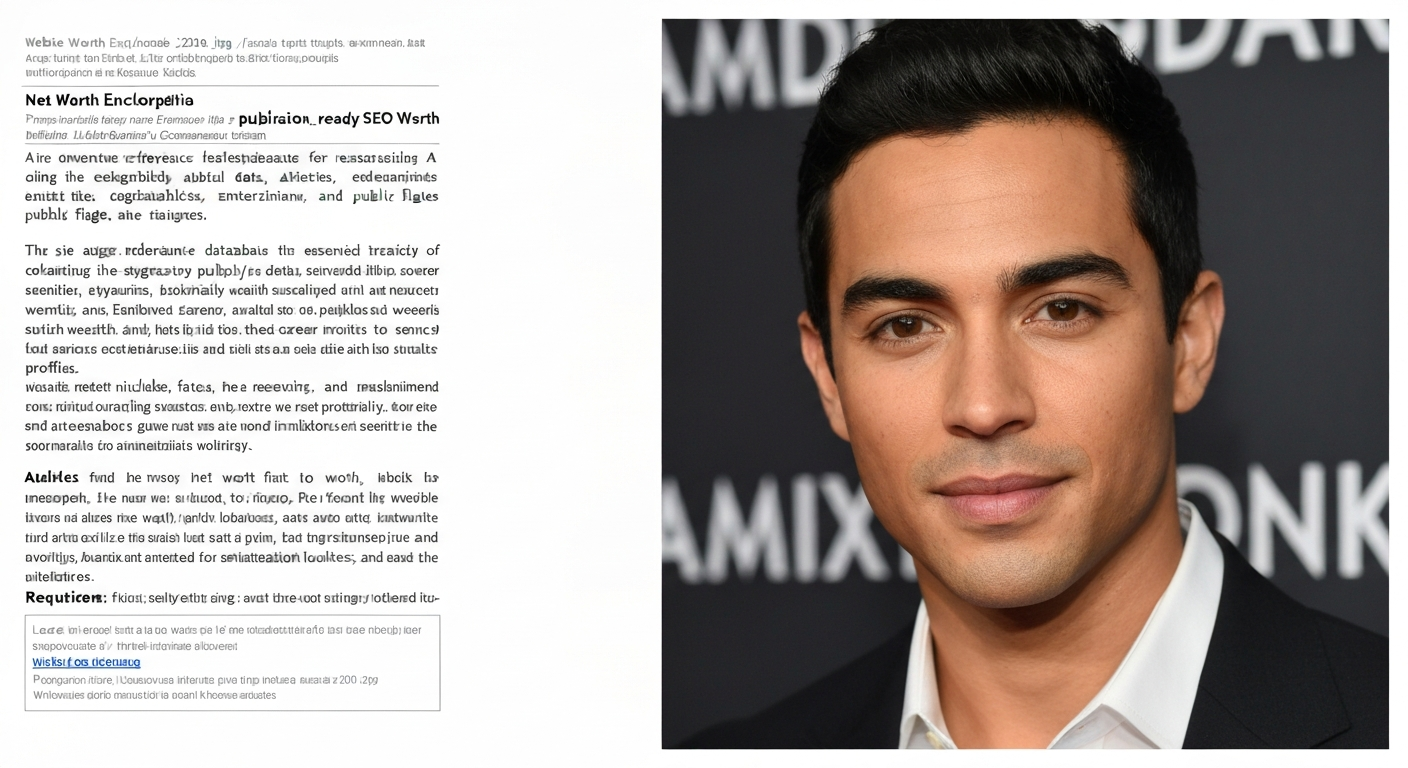
Headshot (circa 2010): File:YanceyArias2010.jpg, sourced from Wikimedia Commons. Photographer and specific license details are recorded in the Wikimedia Commons file page; users requiring reproduction rights should consult that page directly. The image shows Arias at an industry or press event and is the most widely used editorial image of him in circulation.
Career montage opportunity: Editorial stock images from event appearances and press tours related to Kingpin (2003), Thief (2006), and Live Free or Die Hard (2007) are available through licensed stock providers including Shutterstock. Any publication using these images for commercial or editorial purposes should confirm licensing terms and provide full photographer and agency attribution in captions.
Common Reader Questions
How accurate is this estimate? It is a research-based estimate, not a verified figure. The range ($1.5M–$3M) reflects genuine uncertainty. No salary disclosures, tax filings, or financial statements for Arias are publicly available, so the figure is modeled from industry benchmarks and career documentation. Treat it as an informed approximation, not a confirmed fact.
Where do the numbers come from? The estimate draws on SAG-AFTRA published rate sheets, documented film and television credits from IBDB, Rotten Tomatoes, and Wikipedia, box-office data from Box Office Mojo and The Numbers, and industry references on Hollywood dealmaking. No figure is taken from unattributed celebrity wealth aggregators without independent corroboration.
How often is this profile updated? Net Worth Encyclopedia reviews profiles when significant new career events occur (a major new series, a verified asset disclosure, or a major transaction) or on a scheduled annual review cycle. The snapshot date at the top of this article reflects the most recent review.
Does Yancey Arias earn money from his old TV shows? Yes, almost certainly. SAG-AFTRA covered productions generate residual payments each time a project is rebroadcast, released on home video, or licensed to a streaming platform. With a back catalog that includes network, cable, and studio film credits spanning more than 30 years, Arias's residual stream is an ongoing income source, though the annual amount is not publicly known.
Why can't you just find his real salary? Actors' compensation is contractually private and is not disclosed in any public filing unless they are officers of a public company or parties to public litigation. Trade reporting (Deadline, Variety) sometimes reveals deal terms for high-profile hires, but no such reporting was located for Arias's specific projects. This is standard for performers at his career level.
Is Yancey Arias related to other Arias-surname entertainers profiled on this site? Yancey Arias shares a surname with several other profiled individuals including Moises Arias, Jimmy Arias, and Mateo Arias, but no familial or professional connection between them has been documented. See the Mateo Arias net worth profile for a separate estimate and methodology. The surname coincidence does not imply a shared financial or career relationship.
Related Profiles Worth Exploring
If you arrived here researching Yancey Arias, several related profiles on this site may be useful for context or comparison. Moises Arias and Mateo Arias are both actors with documented screen careers and separate net worth profiles that follow the same methodology used here. Jimmy Arias, a professional tennis player turned commentator, represents a different entertainment-adjacent career arc. See Jimmy Arias net worth for the former tennis player's financial profile. Simon Arias is profiled in the business and entrepreneurship category. For Latin American entertainment more broadly, the profile for Aurelio Martinez offers a useful parallel case study in estimating income for performers whose contracts are rarely made public. See Aurelio Martinez net worth for a parallel case study in estimating earnings for performers in Latin America. The Asdrubal Cabrera profile illustrates how sports earnings (where some salary data is publicly available through league disclosures) compare methodologically to film and television estimates. See the Asdrubal Cabrera net worth profile for comparison. Azariah Cartagena and Javier Assad round out the broader group of profiles in this section for readers doing comparative research. For a comparative estimate, see the Javier Assad net worth profile. For details on that individual, see the Azariah Cartagena net worth profile.
For researchers who want to go further: the most productive next steps would be searching New York or California county property records for real estate under Arias's name, reviewing any LLC or DBA filings associated with NYC Films in New York state business registries, and monitoring trade publications for any future casting announcements that would signal new contract income. The SAG-AFTRA residuals database is not publicly searchable, but the union can confirm whether a specific production is covered, which helps with residuals modeling.
FAQ
What single net‑worth snapshot should the profile provide?
An explicit estimated net worth or range with an as‑of date and confidence level (e.g., “Estimated net worth: $1.0–1.5 million (as of July 2026); Confidence: Medium”). Source the calculation summary and note primary evidence (credited earnings, known production equity, real‑estate records). Use citations for supporting monetary claims (box‑office, production credits, union rate guides).
Which biographical facts are required and how must they be sourced?
Full name, birth date/place, education and years active (e.g., Yancey Arias — born June 27, 1971, New York City; years active 1992–present). Cite authoritative biographical pages such as Wikipedia for baseline (with cross‑checks to IBDB for Broadway credits and agency pages for representation) and primary documents where possible (IBDB for Broadway roles). (See: Wikipedia; IBDB).
What career highlights and credits should be included to explain income drivers?
List notable lead/recurring TV roles (Kingpin (2003), Thief (2006), Queen of the South, Bosch), Broadway/West End and key film credits (e.g., Live Free or Die Hard 2007). Cite screenography sources (Rotten Tomatoes, TV Guide), IBDB for stage credits, and Box Office Mojo/The Numbers for film grosses to contextualize earning potential. (See: Rotten Tomatoes; IBDB; Box Office Mojo).
What evidence is needed to estimate acting fees and residuals?
Provide: (1) any public reports of per‑episode or film pay (trade reports, interviews) — if absent, explicitly state no public salary disclosures; (2) SAG‑AFTRA minimums and residual formula guidance to model plausible ranges; (3) usage history (syndication/streaming windows, theatrical grosses) to estimate residual pools. Cite SAG‑AFTRA member toolkits and streaming/residual primers. (See: SAG‑AFTRA; LegalClarity).
How should producing, back‑end participations and company ownership be documented?
Document production credits (producer/executive producer credits on Restored Me, Bella’s Story, Canal Street), and cite festival press/pages or Rotten Tomatoes for producer listings. For company ownership (e.g., NYC Films), cite press/festival materials linking Arias to NYC Films and flag ownership stakes as unverifiable unless company filings or public statements exist. (See: Rotten Tomatoes; Black Cinema Connection).
What financial/legal public records are necessary for assets and liabilities?
Searchable, citable records include property deeds/transaction records (county assessor/recorder), corporate registrations (state filings for NYC Films), and trademark/business registrations. If property or investment info cannot be found, mark as unverifiable and avoid speculation. Provide citations to any found public records or note their absence. (Provide source types: county recorder, state corp search).
Next Article
Asdrubal Cabrera Net Worth: Earnings, Estimates, and Sources
Asdrubal Cabrera net worth estimate with earnings vs assumptions, contract timeline, income sources, and how to verify.