
If you searched "Arellano Félix net worth," the answer is not straightforward, and that is worth explaining upfront. The Arellano Félix name is tied to one of the most documented criminal organizations in U.S. and Mexican federal records: the Arellano-Félix Organization (AFO), a Tijuana-based cartel whose leadership was drawn almost entirely from a single family. There is no single individual with a publicly filed, verified net worth attached to that name. What exists instead is a combination of government seizure records, court filings, DEA and DOJ press materials, and journalistic estimates, none of which add up to a clean number. This article walks you through exactly how to research this, what you can realistically estimate, and what to be skeptical of.
Arellano Felix Net Worth: How to Estimate Reliably

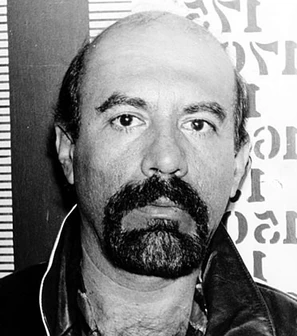
Which Arellano Félix are we actually talking about?

The confusion starts here. "Arellano Félix" is a family surname shared by multiple brothers (and other relatives) who were central figures in the AFO. When people search this name, they are usually looking for one of several individuals, and the search results often blend them together. The most commonly referenced names in U.S. federal materials include Benjamin Arellano-Félix (once considered the organizational leader), Ramón Arellano-Félix (killed in 2002), Francisco Javier Arellano-Félix (captured and sentenced in the U.S.), and Eduardo Arellano-Félix, who was extradited from Mexico to the United States to face federal charges, as documented in Department of Justice materials.
The DEA has publicly referenced "the last of the Arellano-Félix brothers" in press releases covering sentencing proceedings, which gives you a sense of how the U.S. government treats the family as a collective unit while also prosecuting individuals separately. So when you see a net worth figure attributed to "Arellano Félix" with no first name, treat it as a red flag. You need to know which person is being described before any number can mean anything.
What net worth actually means and how estimates get built
Net worth is simple in theory: total assets minus total liabilities. For entertainers, athletes, or business executives, you can build a reasonable estimate by combining disclosed earnings, public filings, real estate records, investment portfolios, and known business ownership stakes. The challenge with any cartel-connected figure is that most of the relevant assets were intentionally hidden, laundered through third-party businesses, held under other names, or seized by governments. That does not mean estimation is impossible, but it does mean the methodology has to be transparent about what you are actually measuring.
For figures like the Arellano Félix brothers, researchers typically approach the estimate in two ways: bottom-up (adding known seizures, reported real estate, and business interests documented in court records) and top-down (taking government estimates of the AFO's total revenue and attempting to attribute shares to individuals). Neither method gives you a precise number. What you get is a range with significant uncertainty, and any published figure claiming otherwise is overstating its confidence.
Building an estimate from verifiable public data

Here is the practical methodology I use when compiling a net worth profile for a figure like this. Start with primary source documents: DOJ press releases, DEA bulletins, and federal court records from the U.S. District Courts that handled extradition and sentencing cases. These documents often include asset forfeiture schedules, which are the closest thing to a verified list of known holdings. They are not complete, but they are legally documented.
- Search PACER (the U.S. federal court records system) for the individual's full legal name as it appears in indictments. Eduardo Arellano-Félix and Francisco Javier Arellano-Félix both have searchable federal case records.
- Pull DOJ and DEA press releases using the official archives. Search for the full surname combination "Arellano-Felix" on justice.gov and dea.gov to locate sentencing, extradition, and indictment announcements.
- Catalog every seizure or forfeiture figure mentioned in those documents. Properties, vehicles, cash amounts, and financial accounts that appear in court records are the most defensible data points.
- Cross-reference Mexican government records or investigative journalism from outlets with documented cartel reporting (such as InSight Crime or Proceso) for assets held in Mexico.
- Note every figure separately by individual. Do not combine brothers unless you are explicitly building a family aggregate, and label it clearly when you do.
- Apply a conservative discount to any estimate not tied to a court record or government seizure. Forbes and similar outlets have occasionally published cartel wealth estimates, but those figures are explicitly speculative and should be treated as a ceiling, not a floor.
Using this approach, the most defensible public estimate for any single Arellano Félix brother is based on what governments have actually seized or documented in legal proceedings, combined with known sentencing details. Individual figures in the range of tens to hundreds of millions of dollars appear in journalistic estimates, but no single court-documented figure for any one brother reaches the billions-level that some websites claim.
Family and brothers: what changes when you zoom out
The search variants "Arellano Félix family net worth" and "Arellano Félix brothers net worth" point to a different, broader question. The AFO at its peak was estimated by U.S. law enforcement to generate hundreds of millions of dollars annually in drug trafficking revenue. Across all the brothers and the broader organizational structure, the combined wealth attributable to the family unit is substantially larger than any individual estimate, but it also becomes much harder to attribute to specific people.
When comparing individual brothers, a few things change the calculation meaningfully. Ramón Arellano-Félix died in 2002, so any estimate of his net worth reflects a historical snapshot with no post-death asset activity. Benjamin Arellano-Félix was captured and extradited, meaning a significant portion of his traceable assets entered U.S. forfeiture proceedings. Eduardo's extradition to the U.S. added another layer of legally documented financial exposure. Each brother's figure has different data availability and a different legal status, which affects both the estimate itself and how much confidence you can attach to it.
| Individual | Status (as of 2026) | Data Availability | Net Worth Estimate Confidence |
|---|---|---|---|
| Ramón Arellano-Félix | Deceased (2002) | Limited; historical records only | Low — historical estimate only |
| Benjamin Arellano-Félix | Convicted; serving sentence | Moderate; U.S. court and forfeiture records | Moderate — court-documented seizures available |
| Francisco Javier Arellano-Félix | Convicted; sentenced in U.S. | Moderate; federal case records | Moderate — sentencing documents searchable |
| Eduardo Arellano-Félix | Extradited; U.S. federal proceedings | Moderate; DOJ extradition and court records | Moderate — DOJ press materials available |
| Family/AFO combined | Organization largely dismantled | Low for aggregate; fragmented across jurisdictions | Low — aggregate figures are journalistic estimates |
Where to actually check and how to judge what you find

Not all sources are equally useful here. Here is a tiered checklist based on reliability for this type of research.
- Tier 1 (most reliable): U.S. Department of Justice press releases and official archives, DEA press bulletins, PACER federal court filings, and U.S. Treasury OFAC (Office of Foreign Assets Control) designation records. These are primary government documents with named individuals and specific financial details.
- Tier 2 (reliable with context): Long-form investigative journalism from outlets with established cartel reporting credentials, such as InSight Crime, Borderland Beat, and Proceso. These often cite government sources and court documents but involve editorial interpretation.
- Tier 3 (use cautiously): General net worth aggregator websites and entertainment finance sites. These sometimes republish unverified figures or compound speculation. Treat any figure without a cited primary source as an estimate of an estimate.
- Tier 4 (unreliable): Social media posts, fan wikis, and any site claiming exact dollar figures without sourcing. These should be disregarded for research purposes.
When evaluating a source, check three things: the date of the information (cartel wealth figures become outdated quickly after arrests and seizures), whether the figure is attributed to a named document or just asserted, and whether the source distinguishes between the individual and the family. If a source says "Arellano Félix net worth: $2 billion" with no name, no date, and no citation, it is not a useful data point regardless of how prominently it appears in search results.
The limits of this research and what not to trust
There are real constraints on what anyone can know here, and I think it is important to be direct about them. First, most of the AFO's financial infrastructure was deliberately designed to be opaque: shell companies, real estate held under family members' names, cash transactions, and cross-border money laundering all make it nearly impossible to produce a precise individual figure. Government agencies with subpoena power and investigative resources have spent decades on this and still work from estimates.
Second, there are legal and privacy considerations. Publishing a specific net worth figure for a living person without strong evidentiary grounding can create problems, particularly when assets may still be subject to legal proceedings, forfeiture disputes, or claims by other parties. Figures tied to ongoing or recently concluded legal cases may change materially as courts issue rulings.
Third, be especially skeptical of figures in the hundreds of millions or billions range that appear on general net worth sites without methodology. The AFO as an organization may have generated that kind of revenue over its decades of operation, but individual net worth is not the same as organizational revenue, and no credible forensic accounting for any individual Arellano Félix brother has been published publicly. Any site presenting a clean, round figure with that kind of precision is almost certainly extrapolating from cartel revenue estimates rather than documented individual assets.
How to build your own sourced net worth profile and keep it current
If you are building a research file on any Arellano Félix figure, here is the workflow I recommend. Start with a document that separates confirmed data from estimated data clearly. Use a simple two-column structure: "source-documented" on one side and "reported/estimated" on the other. Never let those columns bleed into each other when you compile a final figure.
- Create a named profile: specify exactly which individual you are profiling, including their full legal name as it appears in U.S. federal documents, their relationship to other AFO members, and their current legal status.
- Log primary documents: for each DOJ, DEA, or court record you find, record the document title, date, issuing agency or court, and the specific financial detail it contains.
- Build a seizure/forfeiture ledger: list every asset mentioned in court filings by type (real estate, vehicles, cash, accounts), jurisdiction, and estimated value at time of seizure.
- Add journalistic estimates with appropriate labels: note which outlet published the figure, on what date, and what their stated methodology was (if any).
- Set a review trigger: any time a new court proceeding, sentencing update, or extradition is reported, revisit your file. Cartel wealth profiles change significantly with each legal development.
- Flag uncertainty ranges: rather than reporting a single number, document a low estimate (based only on confirmed seizures) and a high estimate (incorporating journalistic and government revenue projections), and explain the gap.
This kind of structured approach is the same methodology used by investigative journalists and law enforcement analysts. It is more work than pulling a number from a search result, but it produces something actually defensible. For a net worth lookup database, this level of documentation is what separates a useful profile from a rumor dressed up as a fact. Researching public figures across very different fields, whether you're looking at an entertainer like Arnel Pineda's career and net worth or a figure tied to criminal proceedings, the underlying methodology is the same: source everything, label your confidence level, and update when new information surfaces.
The bottom line on Arellano Félix net worth is this: there is no single verified figure, there are multiple individuals behind the name, and the most honest estimate is a documented range built from government seizure records and labeled journalistic estimates. If you specifically need the gerald anderson net worth in peso, start by converting any dollar-based estimates using the exchange rate at the time the figure was compiled. If you are specifically searching for Arnel Ignacio net worth, the same limitation applies: there is no single verified, court-documented figure you can safely rely on Arellano Félix net worth. For example, when people ask about Arnold Barboza Jr net worth, the same standard applies: rely on verifiable sources rather than round, unexplained claims Arellano Félix net worth. Anyone who tells you otherwise is either conflating organizational revenue with individual wealth, or they are working from sources that do not hold up to scrutiny. The research is doable, but it requires precision about who exactly you are profiling and discipline about what counts as evidence.
FAQ
How can I tell which “Arellano Félix” a net worth number is actually referring to?
Use first name, court case name, or a specific legal event (for example, an extradition, sentencing date, or forfeiture proceeding). If the source only says “Arellano Félix” without identifying which brother, treat the number as unreliable because the family name is shared and results often combine multiple individuals.
What evidence should I require before accepting a claimed net worth figure for an Arellano Félix brother?
Look for an asset-forfeiture schedule or an exhibit listing seized items (cash, real estate, vehicles, businesses). If the page does not show that kind of legal basis and instead relies on a single round figure, it is usually derived from revenue speculation rather than measurable assets.
Why do Arellano Félix net worth numbers change over time, and how should I handle old figures?
Cartel-related numbers can become stale quickly after arrests, seizures, and court rulings. Prioritize documents and press materials dated within the relevant legal timeline, and assume any estimate older than major sentencing or forfeiture updates may no longer reflect what was actually recovered.
What common mistake causes “family net worth” claims to be misread as an individual brother’s net worth?
Attribution risk is high. When a website assigns the same dollar amount to multiple brothers, or says “family net worth” but labels it “brother net worth,” it is conflating organizational revenue, shared assets, and individual holdings. Always check whether the source explicitly distinguishes individual assets from family-wide assets.
How do I build a defensible range instead of repeating an overly precise number?
Separate what is measurable (seized assets and legally documented holdings) from what is inferential (revenue-to-wealth extrapolations). A defensible approach is to report a range, state what data supports the low end versus the high end, and label uncertainty rather than presenting a single “confirmed” total.
How can I sanity-check claims of hundreds of millions or billions for a specific brother?
If the claim is billions for an individual, verify whether it is tied to any court-documented forfeiture totals or simply extrapolated from estimated trafficking revenue. Without forensic allocation to specific named assets, billions-level individual net worth is usually overstated.
What is the practical workflow for keeping my research file updated as new court or forfeiture information appears?
Use a two-column approach (source-documented vs. reported/estimated) and do not mix them in the final headline. When new court filings arrive, update only the documented side first, then adjust the range if the estimated side must change due to different allocation facts.
Does “net worth” mean the same thing for a deceased brother versus a living one in ongoing cases?
Be careful with living versus deceased individuals. A deceased figure can still reflect a past snapshot, but living individuals may still face pending forfeiture disputes, ongoing seizures, or later court rulings that could materially alter asset availability.
If I only find a vague “Arellano Félix net worth” page, what’s the fastest way to track down the underlying documented assets?
If no first name is given, try searching by the specific sentencing or extradition event and then back into the asset details from court documents. For example, identify the docket or district that handled the case, then look for references to forfeiture schedules within that record.
What are the legal or responsible-publication pitfalls when sharing an individual Arellano Félix net worth claim?
If you publish or store the number, include the confidence label and the measurement basis (seized/documented holdings versus revenue attribution). Also treat any figure as potentially legally sensitive if it concerns assets involved in unresolved proceedings, especially when it is presented as fact for a named individual.
Arnie Segovia Net Worth: How It’s Estimated and Verified
Estimate and verification of Arnie Segovia net worth, with income breakdown, sources, why figures differ, and tracking t